
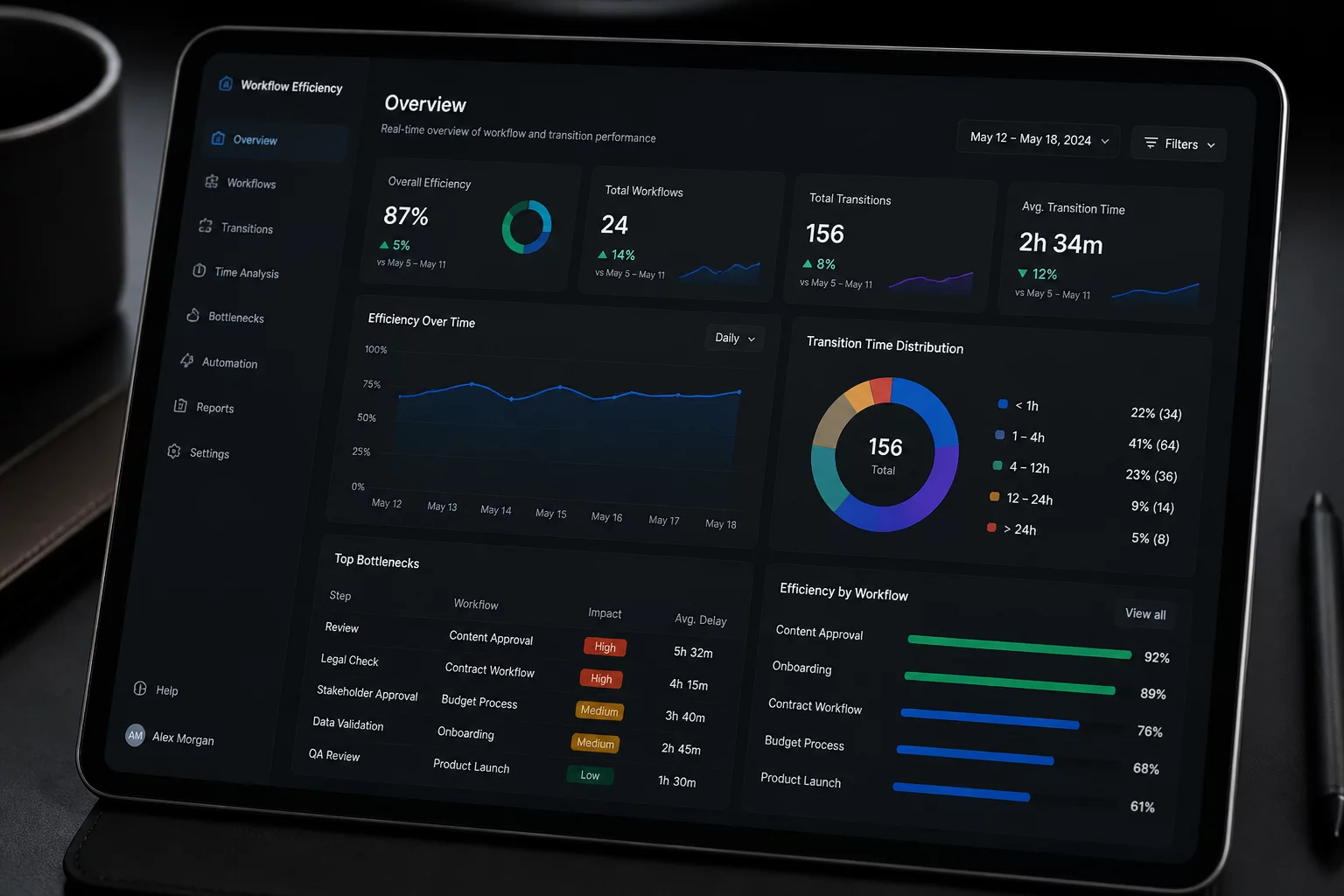
When a construction project moves from design to procurement, and then to field installation, information leaks out at every transition. For general contractors, these leaks do not just represent missing documents—they translate directly into schedule delays, rework, and costly disputes. Tracking handoff performance through objective metrics is the only reliable way to identify where alignment breaks down and how to fix it.
Why Handover Transition Gaps Cost Time and Money
A typical commercial project involves dozens of subcontractors, design consultants, and suppliers. When one phase ends and another begins, the outgoing team leaves behind a pile of drawings, submittals, and emails. However, they rarely pass along the underlying decisions, context, or unresolved conflicts. The incoming trade is forced to guess the design intent or re-verify work that should have been finalized. General contractors who fail to measure the speed and clarity of these transitions find themselves managing constant RFIs and emergency field changes.
Five Key Metrics to Evaluate Handoff Quality
To build a predictable, repeatable transition process, general contractors should establish baseline KPIs that measure information flow and team accountability across the project lifecycle. Focus on these core indicators:
-
1
Transition Latency (Days between stages) This measures the actual calendar time that passes between the official closeout of one trade's work and the active start of the next. A long transition latency often points to unresolved site issues, delayed inspection approvals, or missing coordination documents.
-
2
RFI Volatility in the First 30 Days Track the volume of requests for information submitted by a subcontractor immediately after mobilization. A high spike in RFIs during this phase indicates that the procurement handoff lacked proper context, design intent was unclear, or early coordination meetings failed to address critical constraints.
-
3
Unowned Action Items at Stage Gate During phase reviews, every outstanding issue, design query, or physical mismatch must have a single assigned owner. Calculate the percentage of tasks left unassigned or marked as "general team responsibility." High rates of unowned tasks lead to tasks falling through the cracks.
-
4
Revision Response and Adoption Lag When a drawing revision is issued, how long does it take for the field crew and subcontractors to acknowledge, distribute, and execute the updated plans? Lag in adoption means workers continue installing outdated designs, guaranteeing future rework.
-
5
As-Built Documentation Completeness Instead of waiting for the end of the project, audit as-built accuracy at each phase completion. Measure the percentage of structural field changes that are documented with explanatory photos, signed approvals, and clear geometric references before the trade demobilizes.
Implementing a Continuous Assessment Protocol
Metrics are only valuable if they lead to action. Progressive general contractors set up formal gate reviews at major milestones—such as the transition from foundation to steel erection, or MEP rough-in to drywall. Rather than treating these gates as simple schedule markers, use them to run checklists. Verify that decision logs are fully updated, that physical dependencies are coordinated, and that all pending submittals have been cleared. Incorporating these simple checkpoints keeps team communication open and prevents information loss from accumulating over time.
Frequently Asked Questions
Start by tracking just two metrics: the RFI response time during subcontractor mobilization and the percentage of unowned actions in weekly coordination meetings. Most modern project management platforms already record this data, so you only need to pull the reports and review them during your milestone alignment sessions.
The Lead Project Engineer or the Project Manager should host the gate reviews. They possess the cross-functional visibility needed to ensure both the field supervisors and the design coordination team are synchronized before a new trade starts work on site.